
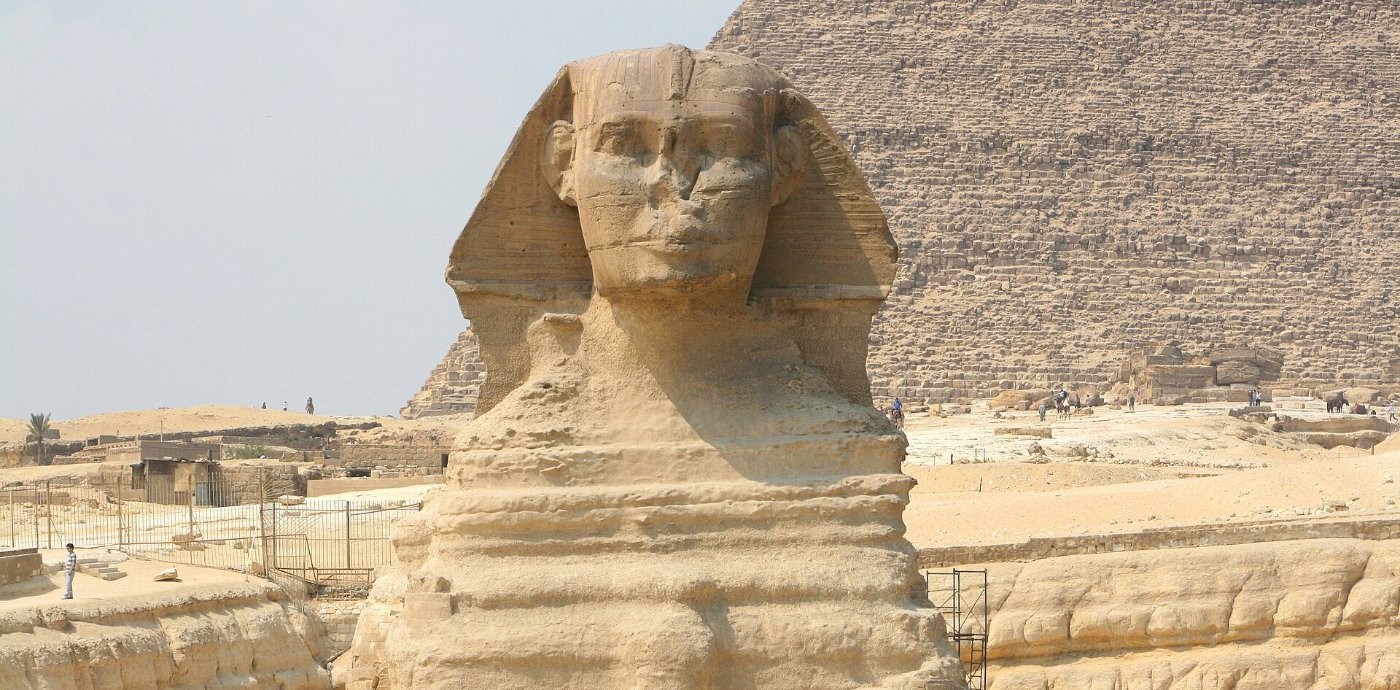
Traditional archaeology puts the Sphinx at about 4,500 years old. The problem is the rock doesn't agree.
Geologist Robert Schoch visited Egypt in 1990 and noticed something the Egyptologists had overlooked. The body of the Sphinx and the walls of its enclosure show deep erosion caused by water. Not wind and sand, which is what you see on Old Kingdom structures nearby. Water. Heavy, sustained rainfall.
The Sahara has been a desert for roughly 7,000 - 8,000 years. Before that, it was lush and tropical. Rainfall that would produce the erosion visible on the Sphinx hasn't existed in that region for at least 7,000 years, probably longer.
Schoch ran seismic studies around the base. Sound waves penetrating the bedrock revealed extraordinary depths of subsurface weathering, consistent with an age well beyond what mainstream archaeology accepts. His conclusion: the oldest portions of the Sphinx date to at least 10,000 BC. Possibly older.
Other geologists have reached similar conclusions independently. The contrast between the Sphinx's water erosion and the wind erosion on nearby Old Kingdom tombs is visible to anyone who looks.
The mainstream response has been what you'd expect. Resistance. Dismissal. The same pattern that delayed acceptance of Gobekli Tepe for twenty years.
What interests me about the Sphinx is what an older date implies. If the Sphinx is 12,000 years old or older, it was built during or just after the Younger Dryas, the same window when everything else I write about was happening. The megafauna extinctions. The meltwater pulses. The flooding. The civilizations that the Hopi and the Sumerians remember.
It's all the same window. And the Sphinx sits right in the middle of it, wearing the evidence like a dang robe made from gems, gold, and starlight, and displayed for all to see.
Photo: Diego Delso, CC BY-SA 3.0, via Wikimedia Commons.