In 1994, a movie came out pretty much asking some of the same question I asked in a few series I've written.
Who really built the pyramids?
The movie was Stargate. Kurt Russell and James Spader. If you missed it, here’s the quick version.
In 1928, archaeologists at Giza dig up a giant metal ring covered in strange symbols. It’s made of a mineral nobody can find anywhere on Earth. Decades later, a broke, laughed-at Egyptologist named Daniel Jackson (Spader) figures out the symbols are coordinates. Dial in seven of them and the ring opens a doorway to another planet.
So the Air Force sends a team through, led by Colonel Jack O’Neil (Russell). They land on a desert world where an alien posing as the sun god Ra keeps a whole people working his mines. He even banned reading and writing so nobody could rebel.
Ancient Egypt and aliens in one movie. You can see why this one’s right up my alley.
The movie turned into Stargate SG-1, which ran ten seasons, from 1997 to 2007. Richard Dean Anderson took over as O’Neill. Yes, MacGyver. Then came Stargate Atlantis for five seasons. (Atlantis. You knew I’d mention that one.) Then Stargate Universe, a couple of movies, and a pile of books and games.
Here’s what I found most interesting.
It started with a documentary
Back in the late 1970s, a film student in Munich named Roland Emmerich watched Chariots of the Gods. That’s the 1970 documentary based on Erich von Daniken’s book, the one asking if ancient people got help from visitors from the sky.
It hit him hard. Emmerich already loved Egyptian history, and he came out of that screening with a movie idea. A spaceship, buried under the Great Pyramid. He called it Necropole, after the Egyptian city of the dead.
It was way too big and way too expensive for a film student. So it sat in a drawer for years.
Then, while making a sci-fi movie called Moon 44, he met an actor named Dean Devlin. The two of them dusted off the old idea and came up with the twist that made it work. Forget the spaceship. Make it a gate.
The gate was a triangle first
Their first stargate was shaped like a pyramid. On paper, it made sense. Egypt, pyramids, triangle. All that jazz.
Then Emmerich pictured the gate dialing up an address, with chevrons spinning and locking into place one at a time. Try spinning a triangle. The gate became a ring, and that ring became one of the most famous props in sci-fi.
Nobody wanted it
Their own agents told them Stargate was a lost cause and to move on to something else.
Studios passed. The producer hated the first cut. The first test screening went badly. Devlin even fudged the budget, telling backers it was a $25 million movie so they’d sign on. It ended up costing about $55 million.
When the reviews came out, Roger Ebert gave it one star. He joked that a movie about the worst director of all time had come out just to get us ready for this one. That wasn't nice.
Audiences didn’t care. Stargate made nearly $200 million worldwide.
Now, when MGM turned it into a TV show, Emmerich and Devlin weren’t invited. Emmerich later said the studio basically took it from them. They’d planned a trilogy, but they never got to make it.
The real Air Force loved it
Stargate SG-1 is a show about a secret Air Force program. The real Air Force could’ve hated that. Instead, they jumped right in.
Real Air Force personnel worked as extras. Two real Air Force Chiefs of Staff, the top officer in the whole branch, played themselves on the show. General Michael Ryan showed up in Season Four. General John Jumper appeared in a scene set in the Oval Office, and since he was the only person on set who’d been inside the real one, he gave the crew tips on how things work in there. He did it for free.
Jumper said recruit surveys showed people were getting to know the Air Force through the show. They even made Richard Dean Anderson an honorary brigadier general.
The Air Force did ask for a few script changes, though. One of them? They didn’t love the show saying aliens were being kept at Area 51.
Of course they didn’t.
The coincidence
There was a real secret U.S. program called STAR GATE.
Starting in 1972, researchers at the Stanford Research Institute in California worked with the government to test psychics. The goal was remote viewing. That means trying to “see” a faraway place, person, or object with your mind alone. Later, the Army ran a unit out of Fort Meade, Maryland. Over the years, about 23 people worked there as remote viewers.
The program went through a bunch of code names. Gondola Wish. Grill Flame. Sun Streak. Its last name was STAR GATE. A Defense Intelligence Agency report from April 1993, more than a year before the movie hit theaters, is titled “Star Gate Project: An Overview.”
In 1995, the CIA had the whole thing reviewed. The review said remote viewing never gave them anything they could actually use. The program got shut down, and the CIA later released thousands of pages about it. You can read some of them online right now. The movie The Men Who Stare at Goats is loosely based on this stuff.
So a secret psychic spy program and a movie about a gate to the stars share the same name, a year apart.
Coincidence? Probably. Emmerich and Devlin say they named theirs after the gate itself.
But it’s fun to wonder.
What’s next
In November 2025, Amazon, which now owns MGM, ordered a brand new Stargate series. Martin Gero, who got his start writing on Stargate Atlantis, was set to run it. Emmerich and Devlin were finally back on board as producers.
Fans lost their minds.
Then in June 2026, Amazon canceled it before a single scene was shot. The execs worried only longtime fans would watch. Fans fought back with a campaign that pulled in more than 120,000 supporters.
Now Amazon is trying again with a new showrunner, Jac Schaeffer. She’s the one who created WandaVision. Nothing else has been announced.
So the gate’s closed for now. Sounds like somebody’s still spinning the wheels, though.
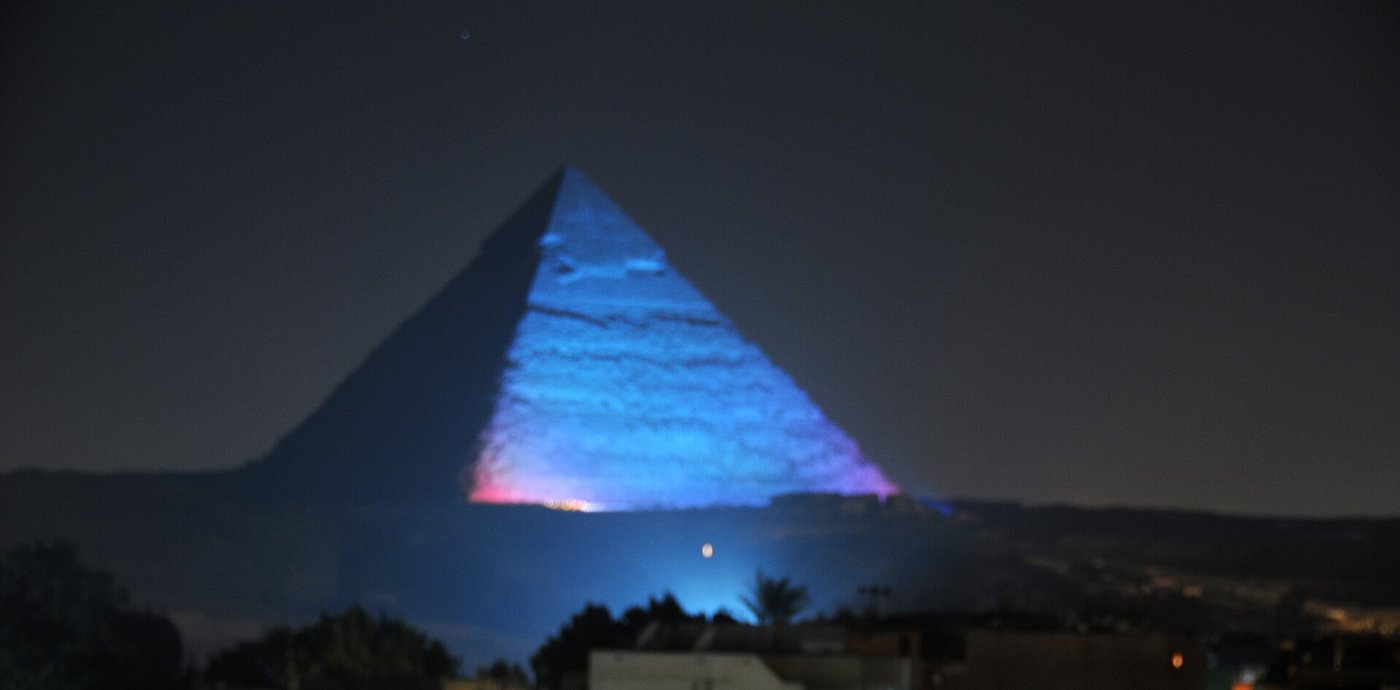
Photo: David Broad, CC BY 3.0, via Wikimedia Commons.