
The Mad Monk
Every country has a man history keeps failing to put away. Russia’s man is Grigori Rasputin.
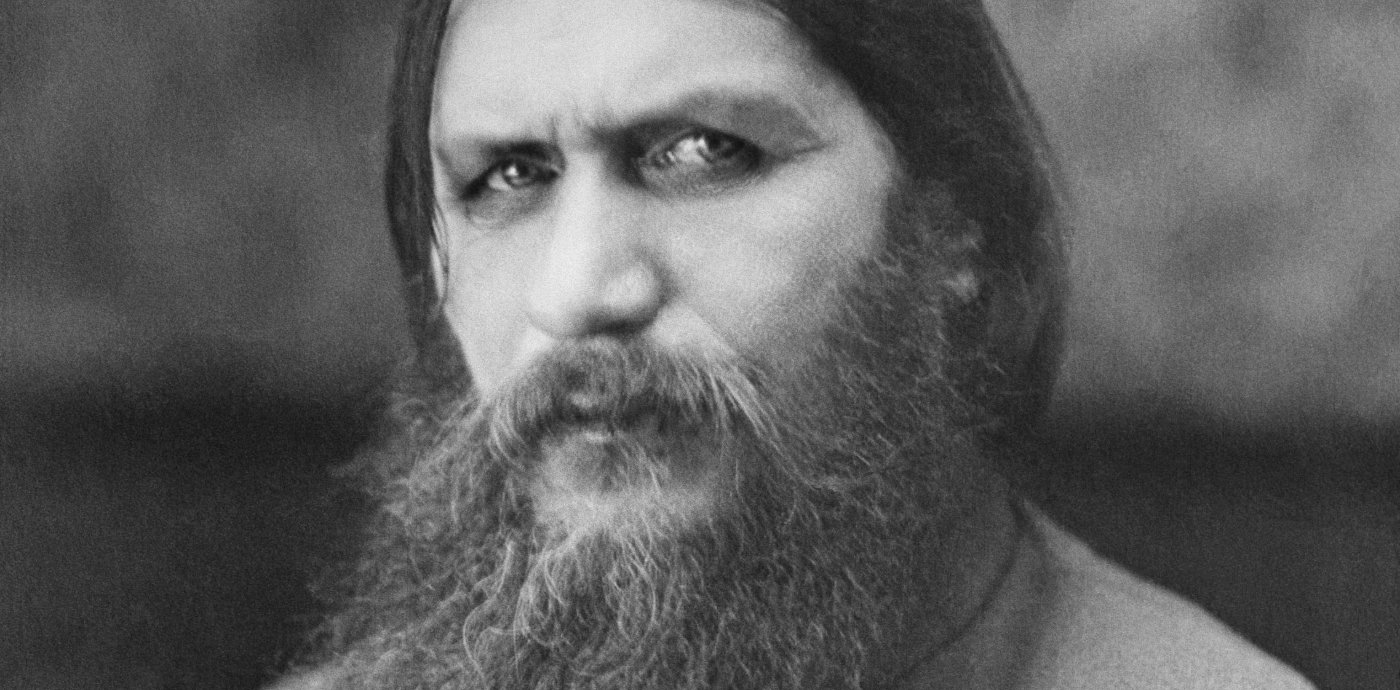
You’ve seen the photos. That wild beard. Those eyes staring clean through the lens. People called him the Mad Monk.
He was a strannik, a wandering holy man who walked from shrine to shrine and survived on whatever people gave him.
Born in 1869 in Pokrovskoye, a tiny village in western Siberia. As a young man he drank, brawled, and faced accusations of stealing horses. Then, somewhere in his late twenties, he walked hundreds of miles to a monastery and came home changed. He took to praying over the sick. A few of them got better. Villagers swore he saw things coming before they did.
The stories moved faster than he did. By 1905 he’d reached St. Petersburg, the capital. That November, the Tsar met him.
The Bleeding Heir
Tsar Nicholas II and his wife, Alexandra, had four daughters and a single son. The boy’s name was Alexei, and someday he’d rule Russia.
Alexei had hemophilia, a disease where the blood couldn't clot. A knock on the knee could swell into days of bleeding and pain. The best doctors in the empire came up empty-handed.
Rasputin had an answer, though, and he’d sit by the boy’s bed, pray, and speak to him in a low, calm voice. And legend says, the bleeding would stop.
The big test arrived in 1912. Alexei was staying at a hunting lodge in Poland when a fall triggered a bleed deep inside his body. A high fever set in. The doctors told the family to get ready for Alexei's death. A priest performed the boy’s last rites. In desperation, a telegram was sent to Rasputin, home in Siberia, well over a thousand miles away.
Rasputin sent a reply. God had seen the mother’s tears, he wrote. The boy would survive. Keep the doctors away from him, and if they don't, the doctors would try to save him, but in their lack of knowledge, they'd accidentally kill him.
The next day, Alexei began to recover.
Call it whatever you want. Prayer. Hypnosis. A calm voice settling a spooked kid’s heart. There’s a simple theory I like. The doctors had Alexei on aspirin, which thins the blood, which in turn makes him bleed more. Rasputin told them to back off, the aspirin was stopped, and the boy’s body healed itself.
Either way, Alexandra now believed Rasputin came from God. And she took his word on everything.
A Mark on His Back
That’s trouble when you’re a Siberian peasant with dirty boots and a taste for wine and women. To the nobles, a filthy nobody was whispering in the Tsarina’s ear. Church leaders labeled him a fraud. Newspapers printed rumors and crude cartoons of him and the Tsarina.
In the summer of 1914, Rasputin was back in Pokrovskoye when a woman named Khioniya Guseva approached him in the street. A scarf hid her disfigured face. She pulled a knife and plunged it into his stomach, screaming that she’d killed the Antichrist.
The cut was so deep his insides showed. Yet, he survived anyway.
While he lay in bed healing, Russia drifted toward World War I. Rasputin sent the Tsar a telegram pleading with him to keep Russia out of it. Still, Nicholas joined the war, and millions of Russians perished.
By 1916, Nicholas was away at the front, and Alexandra was running things at home. Ministers came and went, the ministers frequently changing and at a fast pace, and the people blamed Rasputin, that his influence over Alexandra was causing all the chaos with the ministers. So, in turn, a group of nobles decided he needed to go, and in a deadly way.
The Night He Refused to Die
The plan was Prince Felix Yusupov’s, the richest young man in Russia and husband to the Tsar’s niece. Joining him were the Tsar’s cousin, Grand Duke Dmitri Pavlovich, a politician named Vladimir Purishkevich, a doctor named Stanislaus Lazovert, and an army officer.
On the night of December 29, 1916 (the 16th on Russia’s old calendar), Yusupov had Rasputin over to his palace on the Moika River. He claimed his wife wanted to meet him. She was hundreds of miles off in Crimea.
Yusupov took him to a basement room done up to look cozy. Cakes sat on the table and wine filled the glasses and both were spiked with enough cyanide to kill a handful of men.
He ate the cakes and downed the wine. Then he asked Yusupov to play a song on the guitar for him.
Two hours passed. Upstairs, the rest of them paced and listened. After Yusupov couldn't take it anymore, he went upstairs, grabbed a revolver, came back down, and shot Rasputin in the chest, and Rasputin fell over, dead, and the doctor checked him over and called it that way, Rasputin now deceased.
A while later, Yusupov went down alone to check on the body. He reached out and gave it a shake. Rasputin’s eyes flew open. He lunged up, grabbed Yusupov by the throat, and tore an epaulette right off his uniform.
Yusupov bolted for the stairs, screaming. Rasputin crawled up after him, found a side door, and stumbled out into the snowy courtyard toward the gate.
Purishkevich chased out after him and fired. He missed. He fired once more and hit him in the back. Rasputin dropped in the snow and then someone walked over to him, probably Purishkevich, aimed a pistol, and put a bullet in Rasputin's forehead.
They wrapped the body in cloth, drove it to the Petrovsky Bridge, and shoved it through a hole in the ice of the Malaya Nevka River.
Police Fished the Body out Three Days Later
Word got out that one of his arms was raised, like he’d been clawing at the ice, and his lungs were full of water. The story went that the poisoned, shot, beaten man was still alive when he went under the water.
Who knows if the legend was/is correct.
I digress...
Some historians push it further. A British intelligence officer named Oswald Rayner was close with Yusupov and was in the city that night. A few believe the kill shot came from his gun. That it wasn't just a Russian conspiracy, but a British one as well, and for tactical reasons you could very well imagine.
The Prophecy
One final piece of the legend. Before his death, Rasputin supposedly wrote a letter to the Tsar. If common people killed him, it said, the Tsar had nothing to worry about. If nobles killed him, the royal family would perish within two years.
No one can prove the letter is real. But nineteen months later, in July 1918, Bolshevik soldiers herded Nicholas, Alexandra, Alexei, and the four girls into a basement in Yekaterinburg and shot them all.
As for Rasputin himself? In March 1917, soldiers dug up his body and set it on fire in the woods outside the city. The men who were there said the corpse sat up when the flames rose.
Heat could have been that effect as it contracts the tendons.
That’s the science of it. I still prefer the legend.
Photo: unknown photographer, public domain, via Wikimedia Commons.