We're in the most fascinating times. New tech, new curious minds, and we're discovering more and more these days, a lot of which never makes the news.
(Side note: don't watch the news. It's staged to stress you out, hit your dopamine, shock your system, and bring you back for more negativity. Okay, back to discovery.)
Here's what we keep finding out, that what we were told about the past isn't true, or it's partly true, or it's more true than we thought. And we can hold all of that in one container at the same time and call it learning, call it evolving.
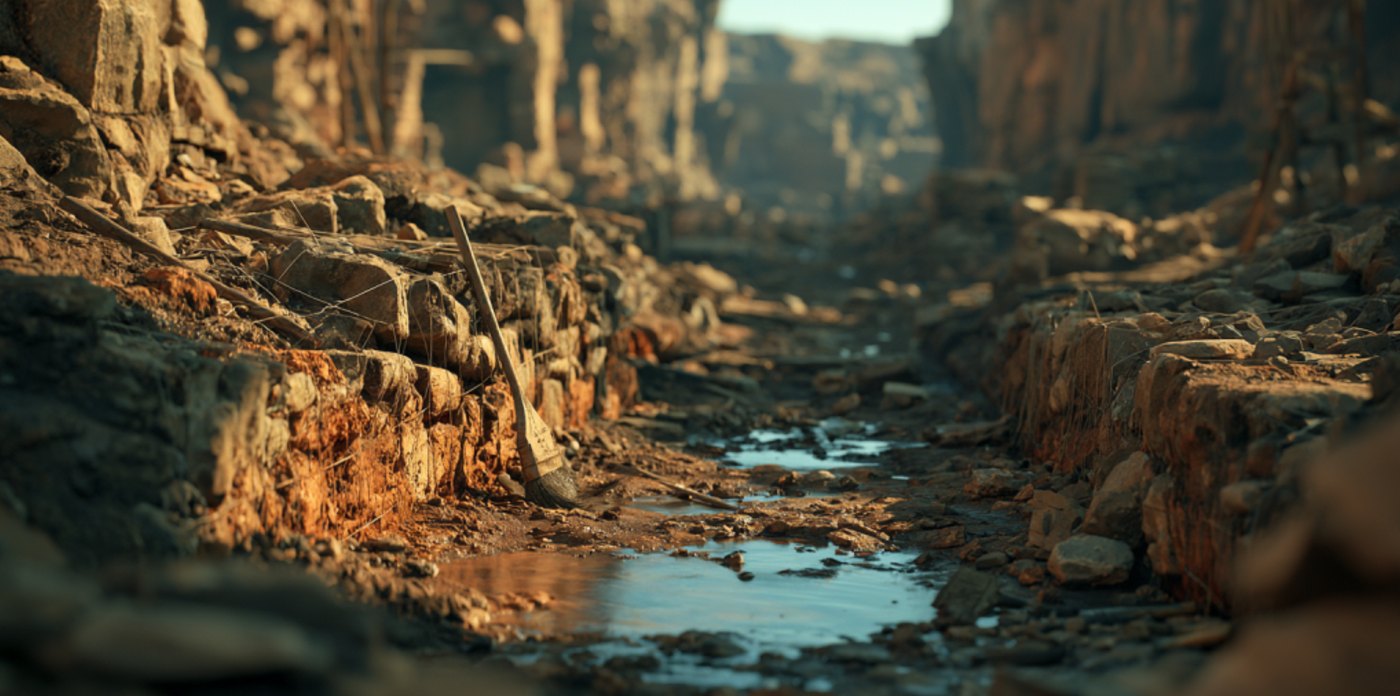
Troy was a myth right up until somebody dug it up in Turkey. The Dead Sea Scrolls gave us a more accurate, a more lengthy, a more in depth version of the history of that corner of the world, written when the older writings they drew from were still fresh and whole and bigger and better and more current, and some of the experiences were happening right there and then, not far away like we get everything now.
We thought life started 6,000 years ago. Then 100,000. Then 300,000. Every discovery pushes the date back, and every time, our brains have to stretch and stretch and be like... okay... I'm good now, and then another discovery, and then stretch and stretch and stretch. We lived amongst five, six, seven different human species, wearing different faces (that's an AI term, but I'm keeping it), walking on Earth at the same time, interacting, breeding, probably hugging, probably laughing, probably smiling and working together and against each other.
And, well, what am I getting at? I had a point here, and kinda lost it.
Oh!
Belief.
Belief can get stuck. Anyone's belief. Doesn't matter if it's the man with the ancient scroll or the man with the tenure, both of them hold onto their version of the past pretty damn hard, and when something turns up that doesn't fit, the evidence stays the same, them not moving a finger to press that button that would say... look... I was wrong a little here, and this is what we've recently found, so let's update our information until we need to update the information again, and again, and again, and...
But discovery doesn't care what any of us believe. It just keeps digging and digging. What it finds is true. It doesn't lie. It just is. It has no dog in the fight, so to speak.
So it really isn't whether the facts we hold will get updated someday. They will. They almost always do. Hell, mine too. Ten years ago, I believed this or that, and nowadays, I no longer believe this or that. So, what's the question here? Well, it's really not a question. It's a statement. That if we hold on tight to what we believe in, any new find, any new evidence, we call it a threat, because what we hold on to mostly are our beliefs.
So, I say, hold them loose and every new find feels like exactly what it is, a discovery to help us, and the container just gets bigger and bigger, and for our benefit.
Fact isn't fact for long. And that's kinda how Earth, humanity, life, works. There's a saying. Scientific fact changes every five years, because it does.
I mean, there was a time we treated bacteria as something to wipe out, full stop. Then the Human Microbiome Project got going in the 2000s and we realized it's one of the most beneficial things in the entire world, especially for humans. Especially for our guts. Especially for the uptake of nutrients. Especially for dopamine levels in the brain. And here we were, convinced it was the enemy, and now convinced, in about a decade, that it's incredible for us, and we can't live without it.
And discoveries like this change our beliefs more and more and more, and on, and on, and on.
I totally came on here to write something about something else, and rambled. Son of a motherless goat!